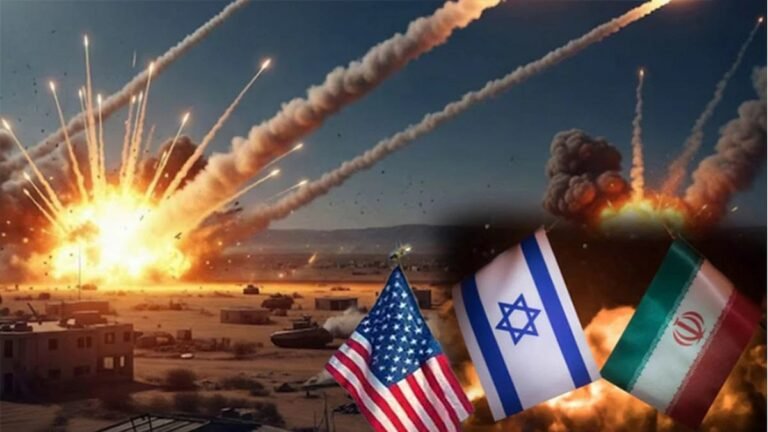
The Middle East has entered a period of major political and security change. At the center of many of these changes is Iran, whose relationship with Israel has moved from a long shadow conflict toward direct military confrontation. Therefore, Iran News has become important for anyone trying to understand the changing balance of power in the region.
Iran News: Why Iran and Israel Are in Conflict
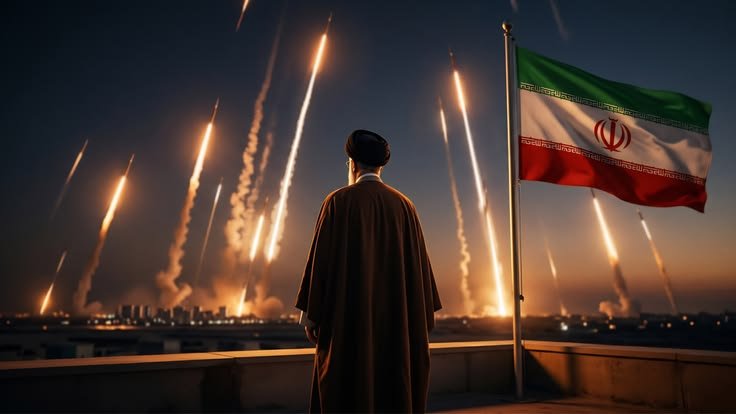
From Regional Competition to Direct Confrontation
Before the Iranian Revolution of 1979, the two countries had diplomatic and strategic relations. However, the Islamic Revolution changed Iran’s foreign policy. The new Iranian government rejected Israel and made support for the Palestinian cause an important part of its regional policy.
Over the following decades, Iran and Israel became strategic rivals.
Israel became increasingly concerned about Iran’s nuclear program, ballistic missiles, military forces, and support for groups opposed to Israel. Iran, meanwhile, viewed Israel as a major regional threat and criticized its relationship with the United States.
For many years, both countries avoided a full direct war. Instead, they fought what analysts often called a shadow war.
Israel reportedly targeted Iranian interests and weapons transfers in several countries. Iran supported regional groups that opposed Israel. Cyber operations and intelligence activity also became part of the rivalry.
However, the pattern changed after major direct attacks began.
The Nuclear Question
Iran’s nuclear program is one of the main reasons for the continuing dispute.
Iran has said that its nuclear program is for peaceful purposes. Iranian officials have repeatedly rejected claims that the country seeks nuclear weapons.
Nevertheless, Israel and several Western governments have remained concerned about Iran’s growing nuclear capabilities.
The 2015 nuclear agreement placed limits on Iran’s nuclear activities and created monitoring arrangements in exchange for sanctions relief. However, the United States withdrew from the agreement in 2018 and restored major sanctions.
Afterward, Iran gradually moved away from some of the nuclear restrictions.
This created a difficult cycle.
Iran argued that it had the right to develop peaceful nuclear technology. Israel argued that Iran’s growing capabilities could eventually create a serious military threat.
As a result, the nuclear issue became closely linked to military planning.
Iran News: Israel’s Attacks on Iran
Why Israel Has Considered Military Action
Israel has repeatedly stated that it cannot allow Iran to develop a nuclear weapon.
Israeli leaders have therefore supported strong pressure against Tehran. In some cases, Israel has also used military force against Iranian targets or Iranian-linked targets outside Iran.
The logic is based on prevention.
Israel believes that allowing Iran to become capable of producing a nuclear weapon could create a danger that would be difficult to reverse later.
Iran strongly rejects this approach. Tehran has described Israeli attacks as acts of aggression and has argued that its military and missile programs are necessary for national defense.
Therefore, both countries present their actions as defensive.
This is one of the central problems in the conflict.
Each side sees its own actions as protection while viewing the other side’s actions as aggression.
The 2024 Direct Attacks
The rivalry reached a new level in 2024.
In April 2024, Iran launched a major attack against Israel involving drones and missiles. The attack followed an Israeli strike on an Iranian diplomatic compound in Damascus that killed senior Iranian commanders.
Israel and its partners intercepted most of the incoming weapons.
Israel later carried out a limited strike inside Iran.
Then, in October 2024, Iran launched another major missile attack against Israel. Israel responded with strikes against Iranian military facilities.
These events were important because they showed that Iran and Israel were willing to attack each other’s territory directly.
The old shadow war had become much more visible.
The Major Israel Iran Conflict
Israel’s Large Scale Attack
The conflict reached another major stage in June 2025.
Israel launched a large military operation against Iranian targets. The operation focused on nuclear facilities, military sites, missile capabilities, and senior military leadership.
Israel said the goal was to reduce Iran’s ability to develop a nuclear weapon and to weaken its missile and military structure.
Iran responded with missile attacks against Israel.
The exchange created a serious risk of a much larger regional war.
For the first time, the possibility of direct and sustained warfare between the two countries became a central concern for governments around the world.
Iran’s Response
Iran responded with waves of missiles and drones.
The Iranian government presented the attacks as retaliation and national defense.
Iran’s ability to launch long range missiles is an important part of its military strategy. The country has invested heavily in missile technology because it does not have an air force comparable to Israel or the United States.
Missiles therefore provide Iran with a way to threaten distant targets.
However, missile attacks also create serious risks for civilians and can lead to further retaliation.
The cycle can therefore become extremely dangerous.
The United States Joins the Conflict
The United States played an important role during the 2025 confrontation.
On June 22, 2025, the United States conducted strikes against Iranian nuclear facilities at Fordow, Natanz, and Isfahan.
The American operation represented a major escalation.
The United States said the strikes were intended to destroy or severely damage Iran’s nuclear capability.
Iran condemned the action and later launched missiles toward Al Udeid Air Base in Qatar, an important American military facility.
The Iranian response was limited compared with what could have become a much wider regional war.
Nevertheless, the direct American attack showed that the conflict was no longer simply a dispute between Tehran and Tel Aviv.
Washington had become directly involved.
Iran News: How Israel’s Attacks Changed the Region
The End of the Old Shadow War
The biggest regional change is that direct conflict became more normal.
For years, Iran and Israel had tried to avoid a major direct war.
Instead, they relied on indirect methods.
That calculation changed.
Once missiles were exchanged directly between Iran and Israel, both governments had to consider a new military reality.
Future crises could therefore move more quickly from threats to direct attacks.
A New Security Balance
Israel has strong air defense systems, advanced aircraft, intelligence capabilities, and close military cooperation with the United States.
Iran has a large missile arsenal, drones, military networks, and regional partnerships.
Neither side has an easy path to completely eliminate the other’s capabilities.
Consequently, the region may move toward a more unstable form of deterrence.
Each side may try to prevent the other from becoming too powerful while avoiding a war that could become uncontrollable.
Regional Countries Face Difficult Choices
Arab states have their own security interests.
Saudi Arabia, the United Arab Emirates, Qatar, Bahrain, Oman, Iraq, Jordan, and other countries do not necessarily want to choose between Iran and Israel.
Many regional governments want stability, economic growth, investment, and secure energy markets.
A major Iran Israel war could threaten all of these goals.
Therefore, regional governments have strong reasons to support de-escalation.
Iran News: The Impact on the Gulf
The Strait of Hormuz
The Strait of Hormuz is one of the world’s most important energy routes.
Large amounts of oil and gas pass through the area.
Iran has a strategic position near the waterway. Any serious conflict involving the Strait could affect global energy markets.
Even the fear of disruption can increase shipping costs and energy prices.
Therefore, a conflict between Iran and Israel can have consequences far beyond the two countries.
Gulf States and Regional Stability
Gulf governments have spent years trying to reduce tensions.
Some Arab states have improved relations with Iran through diplomacy.
At the same time, several Gulf countries maintain strong relationships with the United States and economic relationships with other major global powers.
This creates a complex balance.
They may want good relations with Tehran while also relying on American security partnerships.
Meanwhile, they may have different positions on Israel and the Palestinian issue.
The regional shift therefore cannot be understood as a simple division between two sides.
Iran’s Regional Network
Lebanon and Hezbollah
Hezbollah is one of Iran’s most important regional partners.
The organization has political and military influence in Lebanon and has fought Israel several times.
Its relationship with Iran is a major part of Israel’s security calculations.
At the same time, Hezbollah’s military role is controversial inside Lebanon.
Supporters describe it as a resistance force. Critics argue that its military power weakens the authority of the Lebanese state.
The future of Hezbollah will therefore be an important part of the wider regional shift.
Iraq
Iran has strong political, economic, cultural, and religious connections with Iraq.
Several Iraqi groups have close ties to Tehran.
However, Iraq also has strong relations with Washington and other countries.
This puts the Iraqi government in a difficult position.
Baghdad does not want its territory to become a battlefield between Iran, Israel, and the United States.
Therefore, Iraq has an important interest in preventing regional escalation.
Syria
Iran developed close relations with Syria during the Syrian civil war.
Iranian forces and allied groups supported the government of Bashar al Assad during the conflict.
Israel has repeatedly carried out strikes in Syria against targets it says are linked to Iran or weapons transfers.
Changes in Syria’s political and security structure can therefore affect Iran’s regional position.
Yemen and the Houthis
The Houthi movement in Yemen has also become part of the wider regional conflict.
The Houthis have attacked shipping and launched missiles and drones during regional crises, particularly in connection with the Gaza war.
Iran has supported the Houthis, although the exact nature and level of operational control is often debated.
Their actions have increased the importance of the Red Sea and created another connection between the Israel Palestine conflict and global trade.
Conclusion
For years, Iran and Israel fought mainly through indirect methods. However, direct attacks in 2024 and the major confrontation in 2025 demonstrated that the old limits had weakened. Israel showed its willingness to strike deep inside Iran, while Iran demonstrated its ability to launch significant missile attacks against Israel.
The direct involvement of the United States added another major layer to the crisis. American strikes against Iranian nuclear facilities in June 2025 showed that Washington could become an active participant when it believed Iran’s nuclear capabilities posed a serious threat.