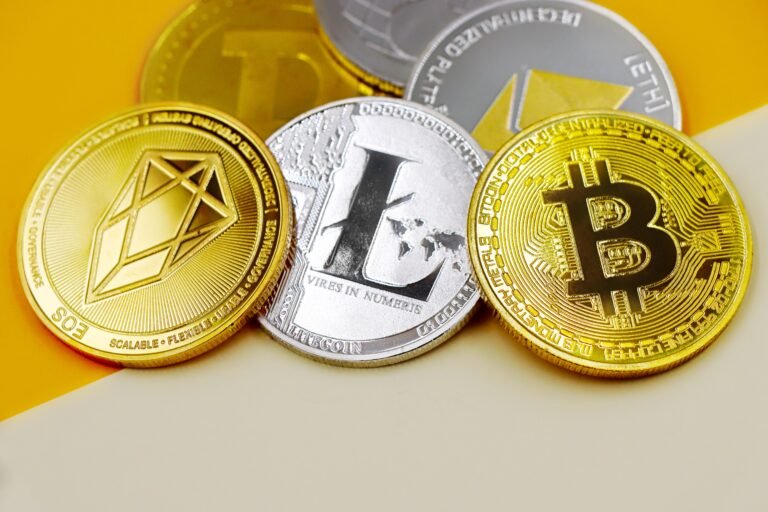
The financial landscape of 2026 has undergone a seismic shift. No longer is cryptocurrency a speculative “wild west” for hobbyists; it has matured into a cornerstone of institutional portfolios and a global digital economy. As we navigate this complex ecosystem, the ability to access and interpret crypto data online has become the single most important factor separating successful investors from the rest.
In this comprehensive guide, we will dive deep into the real-time market trends, the essential metrics you must track, and how the convergence of AI and blockchain is redefining the meaning of market insights in 2026.

1. The Evolution of Market Data in 2026
In the early days of Bitcoin, “crypto data online” meant checking a price on a basic exchange. Today, the data infrastructure is significantly more sophisticated. We are seeing a move from “Narrative Trading” to “Data-Driven Allocation.”
The Institutional Era
As of April 2026, institutional capital has “gone vertical.” With Bitcoin ETFs fully integrated into global pension funds and corporate treasuries, the volatility once synonymous with crypto has begun to compress. Data now shows that nearly 20% of the total Bitcoin supply is held by ETPs (Exchange Traded Products), public companies, and governments. This shift means that tracking institutional flow data is now more critical than monitoring retail social media hype.
Real-World Asset (RWA) Tokenization
One of the biggest trends of 2026 is the tokenization of real-world assets. Private equities, real estate, and government bonds are now being traded on-chain. When you look for crypto data online today, you aren’t just looking at digital coins; you are looking at the digitized version of the global economy.
2. Key Metrics: Beyond Price and Volume
To master the market, you must look under the hood. Relying solely on price charts is a strategy of the past. Here are the “Power Metrics” for 2026:
A. On-Chain Liquidity & Exchange Flows
- Exchange Inflows/Outflows: When huge amounts of BTC or ETH move off exchanges into cold wallets, it signals accumulation. Conversely, massive inflows often suggest a potential sell-off.
- Stablecoin Supply Ratio (SSR): Stablecoins are the “dry powder” of the crypto world. A high supply of stablecoins relative to Bitcoin’s market cap suggests high buying power ready to enter the market.
B. Whale and Institutional Movements
Tracking “Whale” wallets (entities holding >1,000 BTC) provides a glimpse into what the “Smart Money” is doing. In 2026, specialized crypto data online tools will allow us to tag these wallets as institutional, providing a clearer picture of market sentiment.
C. Network Health (Hash Rate & Active Addresses)
For Layer 1 blockchains like Bitcoin and Ethereum, the hash rate represents security. A rising hash rate in 2026 indicates that miners remain profitable and committed, reinforcing the network’s long-term value.
3. The AI Revolution in Crypto Analytics
The most significant technological leap in 2026 is the integration of Artificial Intelligence (AI) with blockchain data.
Predictive Modeling
Modern platforms now use AI to run “Predictive Analysis.” By processing petabytes of historical crypto data online, these AI models can identify patterns that human eyes miss—predicting volatility ranges and momentum reversals with staggering accuracy.
Autonomous Agents
We are entering the era of “AI Wallets.” These are autonomous agents capable of managing digital assets, executing trades, and rebalancing portfolios based on real-time data inputs without human intervention. This makes the accuracy of your data source even more vital, as bots do not have the luxury of “gut feelings.”

4. Regional Deep Dive: USA vs. UK Market Trends
Understanding regional data is essential for navigating the legal and economic shifts of 2026.
The United States: The Era of Clarity
Following the passage of the GENIUS Act in late 2025, the US has finally established a federal framework for stablecoins. Data shows that US-regulated stablecoins now serve as the “Internet’s Dollar,” facilitating billions in cross-border settlements daily. For investors, this means lower risk in stablecoin-paired trading.
The United Kingdom: A Regulated Hub
The UK’s Financial Services and Markets Act (Cryptoassets) Regulations 2026 has brought digital assets firmly within the FCA’s remit. This has led to a surge in UK-based crypto data providers that focus on compliance and “clean” data, catering to the sophisticated London financial market.
5. Top 5 Tools for Tracking Crypto Data Online in 2026
To stay ahead, you need a professional toolkit. Here are the top-rated platforms as of April 2026:
| Tool Name | Best For | Key Feature |
| Glassnode | On-Chain Insights | Cost-basis divergence indicators |
| Coin Metrics | Institutional Data | Real-time settlement & network health |
| Nansen | Smart Money Tracking | Entity labeling and DeFi flows |
| TradingView | Technical Analysis | AI-integrated charting tools |
| CryptoDataOnline | Real-Time News & Trends | Global market sentiment & AI insights |
6. How to Build a Data-Driven Investment Strategy
If you want to use crypto data online to grow your wealth, follow this 2026-standard framework:
- Analyze Macro Demand: Check the global liquidity index and central bank policies regarding digital currencies.
- Monitor Protocol Fundamentals: Don’t just buy a coin because it’s “trending.” Check the TVL (Total Value Locked) and the number of active developers on the protocol.
- Identify Yield Opportunities: In 2026, the “no yield” objection to crypto is dead. Use data to find sustainable staking and lending rates.
- Manage Risk with Volatility Data: Use ATR (Average True Range) and liquidation heatmaps to set your stop-losses effectively.
7. The Future: Beyond 2026
Looking toward 2027 and 2028, the line between “traditional finance” and “crypto” will vanish. We expect:
- Hyper-Personalized Dashboards: Data feeds that adapt to your specific risk profile.
- Quantum-Resistant Data: New encryption standards to protect the integrity of on-chain data.
- Invisible Infrastructure: The technology will become so seamless that users won’t even know they are using a blockchain; they will simply see the high-speed data.
8. Conclusion: Data is the New Gold
In the fast-paced world of digital assets, information is the only true currency. By leveraging crypto data online, you are no longer gambling; you are navigating a sophisticated financial map. Whether it’s tracking institutional shifts in the USA or monitoring the latest DeFi metrics in the UK, staying informed is your greatest competitive advantage.
The market never sleeps, and neither does the data. Use it wisely.
Frequently Asked Questions (FAQ)
1. Is real-time crypto data online 100% accurate?
While most top-tier platforms provide highly accurate data, “slippage” and “latency” can occur during periods of extreme volatility. It is always best to cross-reference data from at least two sources.
2. Can AI really predict crypto prices?
AI cannot “see the future,” but it can identify high-probability setups based on historical patterns and real-time sentiment analysis. It is a tool for probability, not a crystal ball.
3. What is the best metric for a beginner to watch?
Start with Market Dominance (e.g., Bitcoin Dominance) and Fear & Greed Index. These provide a macro view of where the money is flowing and the general emotional state of the market.
4. How do US and UK regulations affect my data access?
Regulations generally improve data quality. In 2026, regulated exchanges are required to provide more transparent reporting, which actually helps the average investor get “cleaner” and more reliable insights.